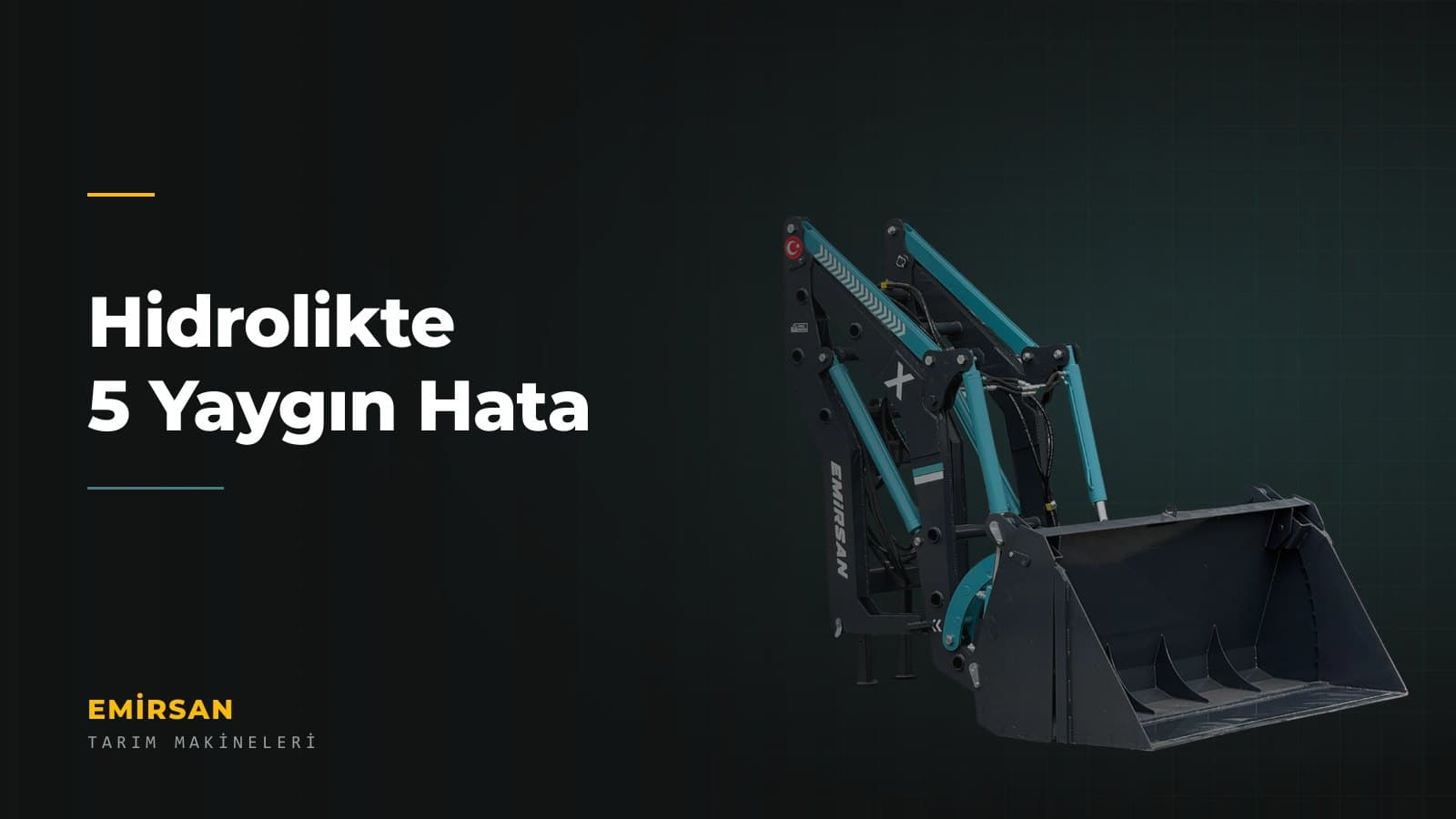
Carrying a silage block without breaking it protects both feed quality and attachment life. A practical guide to pressure settings, tine checks and end-of-season maintenance.
Why does the silage block break apart?
The integrity of the block taken from the pile directly affects feed value. When the block breaks, surface area increases, secondary fermentation starts where oxygen reaches it and nutritional value drops. The goal should therefore be a clean cut rather than fast scooping.
Hydraulic pressure setting
Excessive pressure crushes the block; insufficient pressure lets it slip during transport. In practice a range of 170–190 bar is enough for most silage types. Silage with a high dry-matter ratio may require slightly more.
Tine inspection
- Measure wear on the tine tips at the start of each season; shortening beyond 15 mm noticeably reduces cutting performance.
- A bent tine transfers load onto its neighbours; replacing a single tine is usually the cheapest fix.
- Re-torque the tine mounting bolts once after the first 10 operating hours.
Daily checks
- Any cracks or leaks in the hydraulic hoses?
- Any play in pins and bushings?
- Are the greasing points clean?
End-of-season maintenance
At the end of the season wash the attachment with pressurised water and dry it completely; silage is acidic and residue left on the surface accelerates corrosion. Then grease all moving points and protect cylinder rods with a thin oil film. Store under cover and off the ground where possible.
When is an overhaul needed?
If the jaws close by themselves when the grab is open, the cylinder seals are fatigued. Renewing the seal kit is far more economical than replacing the whole cylinder.